
Expert Plumbers Co
Drain Cleaning in Des Moines, IA near me
Des Moines, IA · 50309 24/7 phone line

Drain Backing Up in Des Moines, IA? Find a Plumber

Slow drains, gurgling or a basement backup in Des Moines, IA? We refer you to a local plumber for Drain Cleaning. Call (380) 262-9173.

Nationwide Coverage
Symptom-First Matching
24/7 Emergencies
No Obligation
24/7
Live phone line

Drain Cleaning enquiry

Ask about Drain Cleaning in Des Moines, IA

Tell us what the drain is doing and we connect you with an independent local Plumber.

Prefer to talk?
(380) 262-9173

Drain Cleaning services

Drain Cleaning and Plumbing Services in Des Moines, IA

Symptom-led Drain Cleaning and related services across Des Moines, IA. Tell us what the drain is doing and we match it to the right plumber.

01 / 06

Drain Cleaning

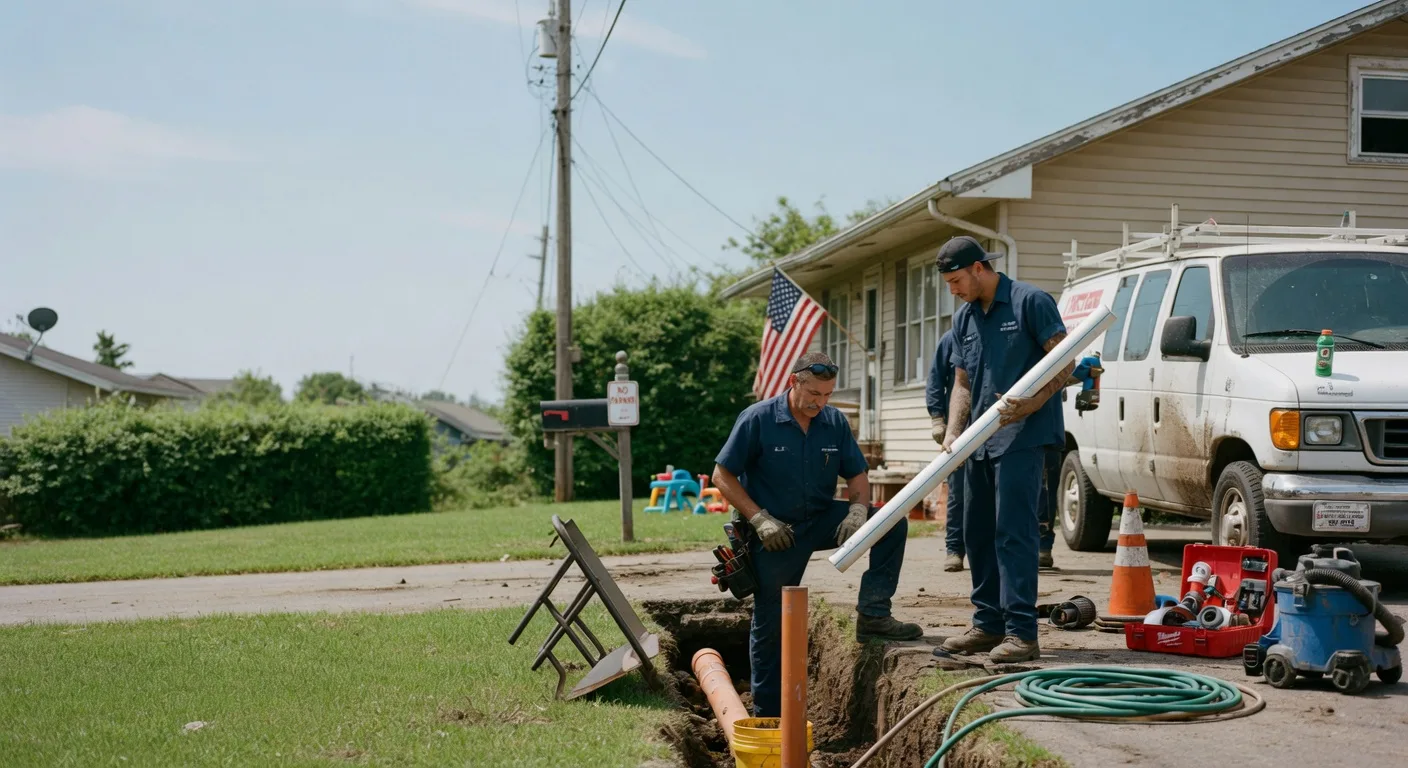
A single sink, tub, or floor drain running slow in Des Moines, IA usually means one localized clog, not a whole-house problem, and a cable machine can clear it.

Talk to a pro
03 / 06

Main Line Cleaning

Every drain in the house backing up at once in Des Moines, IA points to the main line, not one fixture, and needs a larger cable or jetting.

Talk to a pro
05 / 06

Sewer Line Inspection

Recurring backups or slow drains across Des Moines, IA with no clear cause? A camera inspection finds the actual break, root, or bellied section first.

Talk to a pro
06 / 06

Sewer Line Repair

Multiple drains backing up at once in Des Moines, IA, water pooling around a cleanout, or sewage odor in the yard usually points to a damaged sewer line, not a single clog.

Talk to a pro

About Expert Plumbers Co

Drain Cleaning and Plumbing Company in Des Moines, IA

"The kitchen sink is slow, then the basement drain gurgles, and now the toilet won't clear." That is the call we hear from Des Moines, IA homes more than any other. Expert Plumbers Co is a referral service: we pass your Drain Cleaning job to a local plumber and do not send crews ourselves.

The pattern matters. One slow fixture usually means a clog in that fixture's own branch. Every drain in the house slowing down, or water coming up in the lowest drain when you run the washer, points at the main line or the sewer lateral. Those are different jobs with different equipment.

Here is what is specific to Des Moines, IA. By one housing data estimate, about 27 percent of the city's homes were built in 1939 or earlier. In Beaverdale (ZIPs 50310 and 50311), most homes went up between 1920 and 1940. In Sherman Hill, single-family houses date from around 1880, with multi-family buildings added between 1900 and 1920. Homes that old often still have the original clay or cast iron drain lines under the slab and the yard, and many have had only partial updates.

The ground adds to it. Des Moines, IA sits on the Des Moines Lobe, where the Iowa Geological Survey describes the glacial deposits as compact pebbly loam, with uneven sandy and silty pockets in places. Pipe laid in trenches through ground like that can settle unevenly over decades, and a settled section holds water.

The water is a factor too. Des Moines Water Works says it aims to keep total hardness under 150 mg/L, or 8.76 grains per gallon, and it softens with lime at its Fleur Drive and L.D. McMullen plants. The utility itself notes that excessive hardness may affect home plumbing. Over many years, water with dissolved hardness leaves scale on the inside of older iron pipe, which narrows it and gives grease and paper something to catch on.

Storms are the last piece. The city's Public Works Director has said that large, intense rainfalls push water into the sanitary sewer, which can overwhelm pipes and back up into basements. The city and the metro wastewater authority finished removing the last combined sewer overflow into the Des Moines River in 2025, but a private lateral that is cracked or full of roots still lets storm flow in and sewage back out.

What that means for drains here:

  • Root intrusion at a clay joint. Fine roots find the joint, grow into the pipe and catch paper.
  • A bellied line holding water. A sagging section keeps a standing pool, and solids settle there.
  • Scale in cast iron. A rough, narrowed bore snags grease and wipes.
  • Grease build-up on the pipe wall. It narrows kitchen lines slowly, then all at once.
  • A blocked vent stack. Gurgling and slow draining with no solid clog.
  • A failed sewer lateral. A collapsed or offset section stops the whole house.

Call (380) 262-9173 and we will refer you to a local plumber who handles Emergency Drain Cleaning and routine drain work in Des Moines, IA.

01

Symptom-first

One slow fixture is a different job from every drain in the house backing up.

02

Independent

Pricing and on-site work are set by the local provider, not by us.

03

Local

Partners serve the city you called from.

04

Whole-system

Fixture drains, branch lines, main line and sewer lateral.

Why choose us for Drain Cleaning

Des Moines, IA Plumbers for Drain Cleaning

Not every blocked drain needs the same machine. The right tool depends on what the symptom tells you.

Cable machine. A cable (auger) is enough for a single slow sink, tub or toilet with a soft clog such as hair, paper or soap. It also clears a main line with a simple blockage. It punches a hole through the clog but does not clean the pipe wall, so grease and scale are left behind.

Hydro jetting. High-pressure water scours the pipe wall. It suits grease build-up, heavy scale in old cast iron, and roots that a cable keeps cutting back only to see them return. It is not for every pipe. A cracked or collapsed clay line can be damaged by it, which is why a look inside comes first.

Camera inspection. A camera on a flexible rod shows the cause. It finds a root mass at a joint, a bellied section holding water, an offset or a collapse. If the main backs up more than once, or you have a pre-1940 house, the camera usually answers whether you need a cleaning or a repair.

Safe to check yourself:

  • Run water at a single fixture and see whether only that one is slow.
  • Look at the lowest drain, usually in the basement, while an upstairs fixture runs.
  • Pull the stopper or strainer and clear hair or debris you can see.
  • Check that the sump pump is running and its discharge is not tied to the sewer.
  • Stop pouring grease and do not flush wipes, even ones labeled flushable. The City of Des Moines asks residents not to.

Stop running water and call now:

  • Water or sewage coming up in a basement floor drain, shower or tub.
  • Every drain slow or gurgling at once.
  • Sewage smell with standing water around the drain.
  • Backup that shows up during or after a heavy storm.

Do not run the washer, dishwasher or showers. Every gallon you add has nowhere to go but out of the lowest drain. Keep chemical drain openers out of it, because they sit in the line and are hard on whoever has to work on it next.

What drives cost. We do not quote prices. The factors are how easy the cleanout is to reach, the equipment needed (cable, jetter or camera), how long the line is, and the pipe material. A repair adds how much has to be opened up, dug or removed, the parts, and any permit.

Permit and code in Des Moines, IA. The City of Des Moines Permit and Development Center handles plumbing permits. Its published fee schedule lists plumbing permit categories for alterations to existing homes and for sewer service work, and the city keeps separate right-of-way excavation bond paperwork for plumbing contractors digging in the street. Whether your job needs a permit is a question for the center: (515) 283-4200. The city also runs a Private Property Protection Program that reimburses part of the cost of a backwater valve or a sump pump redirect for eligible properties; ask about it before work begins.

About us. Expert Plumbers Co is a referral service. We do not employ plumbers or send crews, and we do not set prices. We connect you with an independent local plumber. Call (380) 262-9173.
  • Independent local partners
  • 24/7 emergency phone line
  • No obligation
  • Nationwide coverage
  • Symptom-first matching
  • Nights and weekends
Call (380) 262-9173
Why choose Drain Cleaning in Des Moines, IA

How it works

Four simple steps to Drain Cleaning in Des Moines, IA

01

Tell us the symptom

Tell us what the drain is doing and where you are.

02

Matched to the job

We match the problem to a plumber who has the right equipment for it.

03

They contact you

They contact you directly to arrange the visit.

04

If it is not right

If they cannot help, tell us and we find another.

Coverage

Drain Cleaning Services Across Des Moines, IA

Covering Des Moines, IA and nearby ZIPs.

Polk County · Capital city and largest metro in Iowa, known for insurance and government. · Humid continental climate with hot summers and cold winters.

Neighborhoods we cover for Drain Cleaning

  • Downtown
  • East Village
  • Sherman Hill
  • Drake
  • Beaverdale
  • Highland Park
  • South Side
  • North Side

Local landmarks

  • Iowa State Capitol
  • Des Moines Art Center
  • Principal Park
  • Blank Park Zoo
  • Science Center of Iowa

ZIP codes we serve

50309 50310 50311 50312 50313 50314 50315 50316 50317 50319 50320 50321
Drain Cleaning Des Moines, IA FAQs

Drain Cleaning FAQs

Frequently asked questions about Drain Cleaning

Questions Des Moines, IA homeowners and businesses ask most about Drain Cleaning, with straight answers.

Talk to a real person
Why does my house smell like sewage even though nothing is backed up?
A sewer smell with no visible backup usually means sewer gas is getting into the house through a path other than a clog. The most common cause is a dry trap. Every drain has a U-shaped trap that holds water as a seal, and in a rarely used drain, like a basement floor drain or a guest bathroom, that water evaporates. Pouring a bucket of water down the drain refills the seal, and it often fixes the smell in minutes, so that is a safe homeowner check. A loose or failed wax ring under a toilet can leak gas at the base, and a rocking toilet is a clue. A cracked vent pipe in the attic or wall can release gas inside the house. Outside, a damaged sewer line or an open cleanout can send the smell into the yard and then indoors. If the smell is strong, comes with slow drains, or you feel dizzy or sick, leave the area and call right away. If it lingers after you refill the traps, the vent stack or the sewer line itself may need a camera check. Call Expert Plumbers Co at (380) 262-9173 to get connected with an independent local plumber in Des Moines, IA. One thing worth knowing is that the smell often follows a pattern, and the pattern points to the source. If it is strongest right after you run a shower or flush a toilet, the gas is probably escaping from a leaking drain joint or a cracked vent inside a wall. If it comes and goes with the weather, a low-pressure day or strong wind can pull gas back down a vent. In older homes, deteriorated cast iron or lead-and-oakum joints are common leak points. Newer homes with plastic pipe more often have a missed glue joint or a dried trap. When you talk to the plumber, say which room the smell is in, what time of day it shows up, and whether it changes after water use. That detail can save an hour of searching. Expect the fix to be small if a trap or wax ring is the cause, and larger if a wall has to be opened to reach a joint.
Why does my basement floor drain back up when it rains?
A floor drain that backs up when it rains is usually not a clog in the drain itself. It means the sewer line outside the house is full, and the water has nowhere to go but up through the lowest opening, which is your basement floor. Heavy rain can push extra water into the main line through cracked joints, root intrusion at a clay joint or a failed sewer lateral. The line fills, and the floor drain shows it first. Safe homeowner check: on a dry day, pour a bucket of water into the floor drain and see if it runs away normally. Keep stored items off the floor, and do not run the washer, showers or dishwasher during the storm. Stop running water and call now if sewage is rising, the smell is strong, or every drain in the house is gurgling or backing up. That points to the main line, not one fixture. A cable machine can clear roots or grease when a blockage is the cause. If the line keeps filling in wet weather, a camera inspection is the next step, because it shows whether the pipe is cracked, bellied or breached. Hydro jetting washes the pipe wall once the cause is known. Cost depends on access, how much has to be opened up, the materials involved and any permit requirement. Expert Plumbers Co is a referral service. Call (380) 262-9173 and we will connect you with a plumber serving Des Moines, IA for Emergency Drain Cleaning or a camera inspection. Pay attention to how fast the drain responds, because it tells you how serious the cause is. If the water rises within minutes of a downpour starting and drops soon after it ends, the line is being overloaded by water entering through cracks or joints. If it stays up for hours after the rain stops, something is also holding water in the pipe, such as a belly or a root mass. Older homes often have clay or cast iron lines with many joints and sometimes a downspout or foundation drain connected to the sewer, which makes wet-weather backups more likely. Newer homes with plastic pipe usually have fewer joints, so a backup there points more strongly to a blockage or a municipal main running full. Tell the plumber when the backups began, how heavy the rain was, and whether any gutters or sump discharge are tied into the house drains. Once the cause is fixed, the floor drain should stay quiet through storms.
What is a cleanout and why does the plumber keep asking if I have one?
A cleanout is a capped pipe fitting that gives a plumber direct access to the sewer line. It usually looks like a round plug, three or four inches across, sitting on a short stub of pipe. You will often find one in the basement near the main stack, in a crawlspace, along an outside wall or in the yard near the foundation. The plumber asks because it decides how the job is done. With a cleanout, a cable machine or hydro jetter goes straight into the line. Without one, the equipment has to go in through a toilet, a floor drain or the roof vent. That can mean pulling a toilet, and it limits how far the machine travels and how well a camera can see. Safe homeowner check: find the cap and note where it is. Do not unscrew it if the house drains are backed up. Water can be standing behind the cap, and it will come out. Stop running water and call now if the cleanout is wet or leaking, or if several drains in the house are backing up together. That points to a blockage in the main line. If your home has no cleanout, adding one is often part of the job. What it costs depends on access, how deep the line is, how much has to be dug or cut open, and whether a permit applies. Expert Plumbers Co is a referral service. Call (380) 262-9173 and we will connect you with a plumber serving Des Moines, IA for Drain Cleaning. A few practical points help when a cleanout is involved. The cap can be stuck from years of rust or paint, and forcing it with a long wrench can crack the fitting, so leave a stubborn one to the plumber. Keep the area around it clear of storage, snow, soil or landscaping so the crew can reach it quickly. In older homes the cleanout may have been buried when the yard was regraded, or covered by a patio or flooring, and finding it can take some probing. Newer homes usually have one near the foundation or at the property line, sometimes with a green or black cap flush with the lawn. If a plumber can find or install one, later cleanings and camera inspections become simpler and less disruptive, because the equipment enters the line at a planned point and nothing indoors has to be disturbed or removed.
The toilet is clogged. When is a plunger enough, when do I need a closet auger, and when is it the main line?
A plunger is enough when the bowl is slow or full but the clog is close, usually paper or a bit too much of everything. Use a flange plunger that seals over the drain opening. Push gently first to push out the air, then pump firmly for 15 to 20 strokes. If the water drops and the toilet flushes freely, that was it. Do not flush again until the bowl has drained. A closet auger is the next step when the plunger fails twice or the toilet clogs again right away. It is a short cable with a curved head made to pass through the toilet's trap without scratching the porcelain. Feed it in, turn the handle, and pull back out whatever it catches. It reaches a clog the plunger cannot pull or push, such as a wad of wipes or a solid object. It may be the main line when the toilet is not the only sign. Look for these: Other drains are slow too. The tub or shower gurgles or backs up when the toilet is flushed. Water rises in a floor drain or low fixture. A plunger and an auger give no lasting relief. If you plunge and water or sewage comes up in the tub or another fixture, stop. Do not keep flushing. The blockage is past the toilet, in a branch or the main sewer line, and more water only pushes it into the house. Stop and call if sewage is spreading on the floor, or if you hear gurgling and smell sewage. Clearing a main line may call for a cable machine, hydro jetting or a camera, depending on what is in there and how often it returns. Cost depends on access to a cleanout, how far the machine has to travel and what is found. Avoid chemical cleaners in a standing toilet. They do not move a solid clog and they splash onto skin and eyes. Expert Plumbers Co can connect you with an independent plumber in Des Moines, IA for this: call (380) 262-9173.
My sink gurgles after it drains and someone mentioned an air admittance valve. What is that, and can it fail?
"My sink gurgles after it drains" is one of the most common things people notice before a drain problem gets worse. Every fixture needs a vent so water leaving the trap does not pull a vacuum. When air cannot get in, it gets dragged through the trap water instead, and that is the gurgle. An air admittance valve, or AAV, is a small one-way valve fitted on a vent pipe, often under a sink or in an attic. It opens to let air in as water drains, then drops shut so sewer gas stays in the pipe. Many local codes allow them and some do not, so rules vary by area. Yes, they can fail. The rubber seal wears, dust or debris stops the flap seating, or the valve sticks. A valve that will not open brings back the gurgling and slow draining. One that will not close lets a sewer smell into the cabinet or room. A blocked vent stack on the roof, a partial clog in the drain, or a bellied line holding water can also cause gurgling. One gurgling fixture usually points to its own trap, branch line or vent. If the tub, toilet and floor drain all gurgle together, or the toilet bubbles when the washer empties, suspect the main line or the main vent. Safe homeowner check: Run just the gurgling sink and listen, then run another fixture and see if it does the same. Do not pry at vent parts inside walls, and do not pour drain chemicals into a line that is already gurgling. Stop running water and call now if sewage smell is strong, water comes up in a tub, shower or floor drain when you use another fixture, a toilet bubbles or rises, or any fixture stops draining. A cable machine is usually enough for a clog in a single branch line, like the pipe behind one sink. If the gurgle returns, or several fixtures are affected, the plumber may want a camera inspection to look for root intrusion at a clay joint, a bellied line, or a failing section. A blocked roof vent is cleared from the roof, not with a drain cable. Expert Plumbers Co is a referral service. We connect you with an independent local plumber in Des Moines, IA. Call (380) 262-9173. Ask the plumber whether an AAV is permitted where you live, or whether a conventional vent is needed instead. Cost depends on access to the pipe, the parts or materials needed, how much wall or ceiling has to be opened, and any permit or code requirement.

Talk to a local Plumber

Need a plumber in Des Moines, IA for Drain Cleaning? Call now.

Describe the problem and we connect you with a local Plumber for Drain Cleaning or Emergency Drain Cleaning. Call (380) 262-9173.

Call (380) 262-9173 Services